


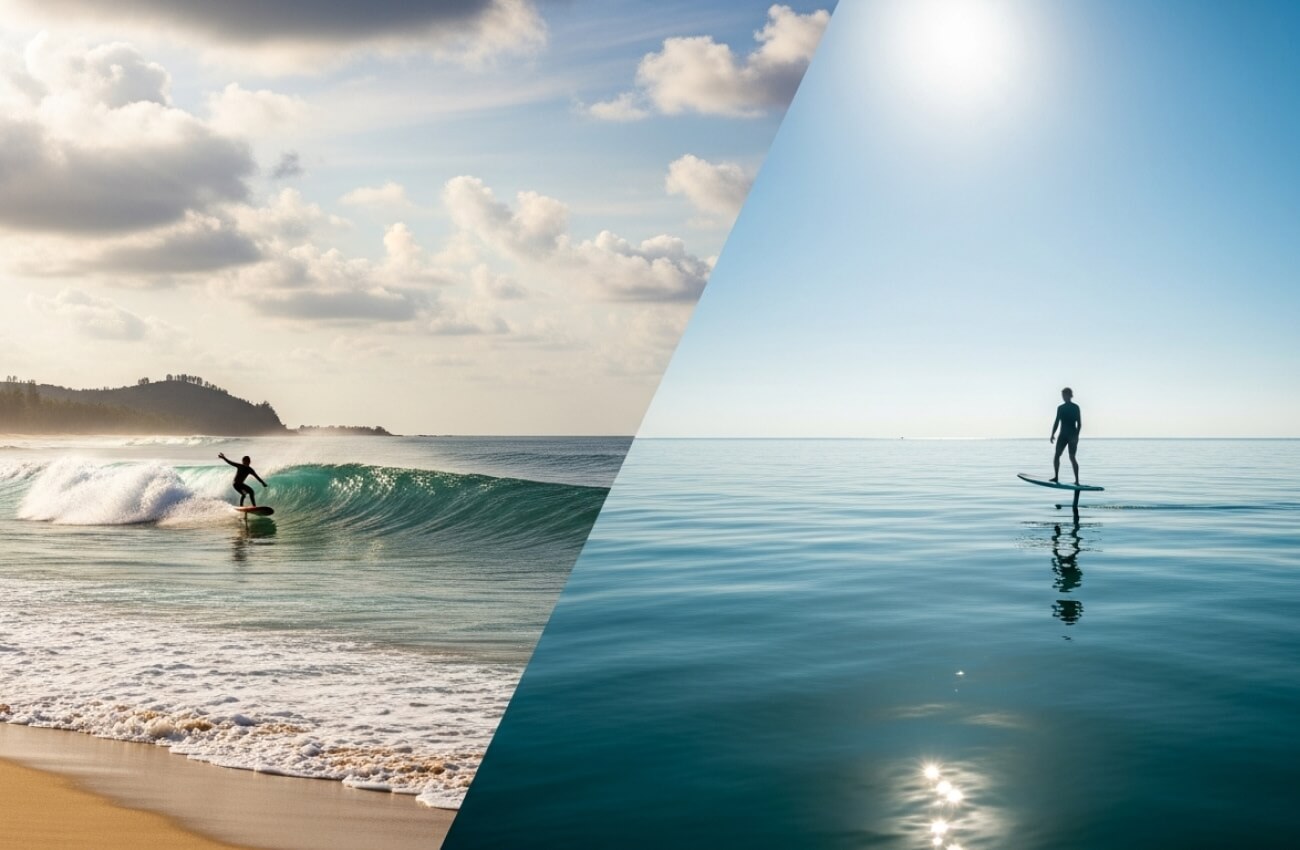
The Best Time of Year for eFoiling in Thailand: Phuket vs. Koh Phangan
eFoil riding in Thailand works year-round, but timing matters. November through April delivers the calmest water conditions on both islands. Wind stays lighter, waves smaller, and visibility better during these months. That said, each location has its own seasonal patterns worth understanding before booking lessons or rental sessions.
Understanding Thailand’s Two Seasons
Dry Season: November to April
This period offers the best time for most water sports across Thailand. Rainfall drops significantly. Wind patterns stay predictable—usually calm early mornings, picking up slightly by afternoon. Water clarity improves as rivers carry less sediment to coastal areas.
Air temperatures sit around 28-32°C. Water temperature stays at 27-29°C. No wetsuit is needed any time of year. Battery performance remains consistent in these conditions, giving you the full 60-90 minute ride time per charge.
Wet Season: May to October
Monsoon months bring afternoon rain showers and stronger winds. Not impossible for eFoiling, but conditions get choppy more often. Advanced riders handle it fine. Beginners struggle with unstable water and reduced visibility.
Some operators reduce hours during peak monsoon (August-September). Equipment requires more maintenance due to moisture. But rental rates vary during this period—sometimes lower due to decreased demand.
Phuket’s Weather Patterns for E-Foiling
Peak Season: December to March
Phuket sees its calmest conditions during these four months. Early mornings at spots like Rawai and Nai Harn offer glass-smooth water perfect for beginners. Most eFoil Phuket operations run daily sessions with consistent conditions.
December and January get busiest with tourists, but water quality stays excellent. February and March provide slightly fewer crowds while maintaining great riding conditions. Instructors report first-timers progress fastest during this window.
Shoulder Months: November and April
Still solid for e-foiling. November transitions from wet to dry season—expect occasional afternoon showers but generally calm mornings. April heats up (33-34°C air temperature) with variable afternoon winds.
These months work well if you want to avoid peak tourist season while still getting quality water time. EasyFlyFoil operates year-round on Phuket, with professional guidance available and electric surfboard rental fully operational during shoulder periods.
Monsoon Impact: May to October
The southwest monsoon hits Phuket’s west coast hard. Waves build on popular surf spots. That excites traditional surfers but complicates eFoil lessons for beginners. The Andaman Sea gets rougher, with 1-2 meter swells common.
East coast locations like Cape Panwa stay moderately protected. Experienced riders can find flyable conditions, but expect to check forecasts daily. Schools in Thailand often recommend rescheduling if conditions look marginal.
Koh Phangan’s Seasonal Advantages
Year-Round Riding Window
EFoil Koh Phangan conditions differ from Phuket due to Gulf of Thailand positioning. The island stays more sheltered from monsoon systems. While Phuket battles southwest winds, Koh Phangan often maintains rideable water.
Chaloklum Bay and Haad Rin face different directions, creating options regardless of wind direction. When one spot gets choppy, another usually stays calm. That flexibility extends the practical riding season significantly.
Best Months: December to August
Unlike Phuket, Koh Phangan offers excellent conditions well into summer. January through March deliver the most consistent glass-smooth mornings. But April through August remains highly rideable—especially for those who’ve completed a few sessions.
September and October see the most rainfall and wind. Even then, calm windows exist during early mornings. Patient riders willing to watch forecasts can usually find 2-3 hour windows of good conditions most days.
Water Clarity Differences
Koh Phangan’s crystal-clear turquoise water stays visible year-round. Less river runoff compared to mainland Thailand means sediment stays minimal. That makes the thrill of e-foiling more scenic—you’re gliding over visible coral and tropical fish.
Visibility helps with learning too. Seeing the hydrofoil wing underneath your board provides visual feedback on angle and depth. Beginners appreciate this, especially when trying to understand how small weight shifts affect the ride.
Planning Your eFoiling Trip
For First-Time Riders
Book during peak dry season (December-March) if possible. Calm water accelerates learning. Most people stand up within their first lesson when conditions cooperate. Choppy water doubles the learning curve.
Choose Koh Phangan if traveling during shoulder months (April-May or October-November). The island’s protected bays give you better odds of finding smooth water for your initial sessions. Expert guidance matters most during these variable periods.
For Experienced Riders
You have more flexibility. Advanced riders handle moderate chop and can adjust to changing conditions. Visiting during May-October can mean fewer crowds and more affordable options available.
Both islands offer different experiences:
- Phuket: More rental locations, larger operations, busier water
- Koh Phangan: Quieter spots, better year-round consistency, tropical island vibe
Session Timing Strategy
Regardless of season or location, early mornings win. Wind builds throughout the day. Schedule your eFoil session between 7-10 AM for the calmest conditions. Afternoon’s work, but expect more surface texture.
Full moon periods create stronger tidal currents around Koh Phangan. Not a dealbreaker, but something EasyFlyFoil instructors monitor closely when planning sessions. New moon phases tend to bring calmer water overall.
Making the Final Choice
Both destinations deliver excellent eFoiling opportunities. Phuket dominates during November-April with established infrastructure and numerous best beaches. Koh Phangan offers longer riding windows and more intimate adventure settings.
Consider your skill level and travel dates. Absolute beginners benefit from guaranteed calm conditions—lean toward peak season on either island. Confident riders seeking a must-try water sport experience can explore either location during extended seasons.
Weather apps help, but local knowledge matters more. Operators at both spots track micro-conditions and suggest optimal session times. Trust their recommendations for the best experience on the water.

E-foil surfing instructor
Hello, fellow sailors! My name is Anton and I am your guide in the world of surfing. Let’s dive into the waves together!