


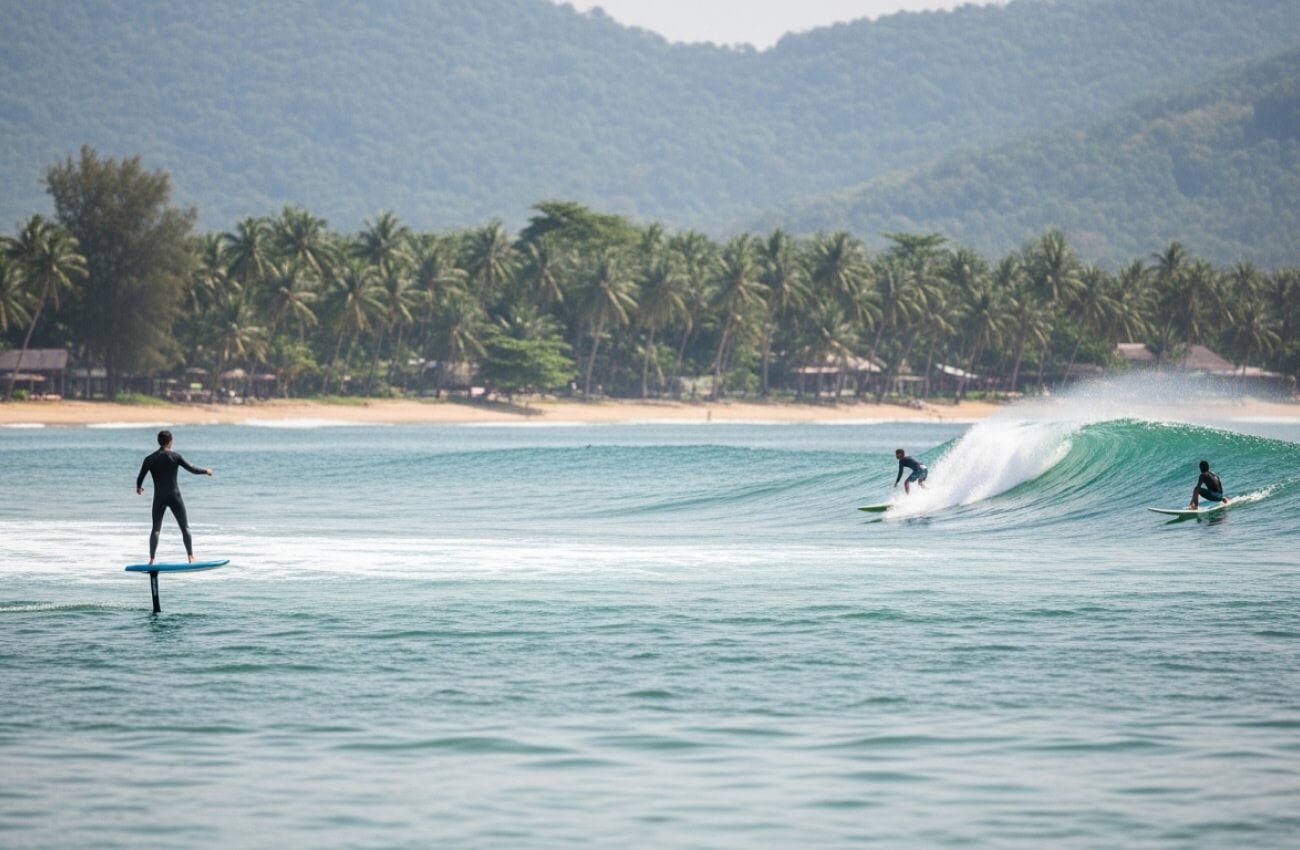
EFoiling vs. Classic Surfing in Phuket and Koh Phangan
EFoil riding and traditional surfing operate on entirely different principles. One uses an electric motor and hydrofoil to lift above water regardless of wave conditions. The other requires natural swells, paddle power, and precise timing. Both water sports offer unique experiences in Thailand, but choosing between them depends on your goals, physical ability, and what kind of freedom you want on the water.
How Each Sport Actually Works
Traditional Surf Mechanics
Classic surfing requires swells. You paddle into position, match the water’s speed, pop up, and ride the face using gravity and momentum. Balance comes from constant micro-adjustments as the surface shape changes beneath your surfboard.
Learning this sport takes time. Most beginners spend weeks just practicing the pop-up on flat water before successfully catching their first ride. Ocean conditions dictate everything—no swells means no riding.
eFoil Technology and Control
An eFoil uses a wing-shaped foil mounted beneath the board on a mast. When the electric motor reaches 12-15 km/h, the hydrofoil generates lift, raising the board 60-90 cm above the water surface. You control speed using a wireless handheld remote.
Balance still matters, but you’re not fighting wave turbulence. Flat water works perfectly. Most people achieve stable flight during their first lesson—usually within 30-40 minutes of initial attempts. The combination of technology and intuitive controls speeds up progression more than classic methods.
Learning Curves: What Each Sport Requires
Traditional Surf Progression
Basic surf instruction starts with understanding ocean safety, reading wave sets, and paddling technique. You’ll spend considerable time learning to position yourself correctly before attempting to stand. Physical fitness helps—paddling demands upper body strength and cardiovascular endurance.
First sessions rarely produce successful rides. Most beginners need 3-5 lessons before consistently catching waves. Weather and swell conditions limit when you can practice. During flat periods, training stops entirely.
eFoil Training Timeline
When enrolling at an eFoil school, expect structured progression. First lessons cover equipment safety, remote control operation, and basic balance on the board while stationary. Beach practice takes 15-20 minutes before entering water.
Professional instructors guide you through throttle control while you’re kneeling on the board. Once comfortable with speed modulation, you attempt standing. The electric system’s consistent power makes this progression predictable—no waiting for perfect wave conditions.
Most beginners glide above water during their first 90-minute session. By lesson three, riders typically control speed, make gentle turns, and maintain flight for several minutes. That timeline beats traditional surf learning by weeks or months.
Where Each Sport Works in Thailand
Phuket Surf Conditions
Phuket’s west coast offers surf spots from May through October during southwest monsoon season. Kata Beach sees consistent swells during these months, attracting classic surfers. Wave height varies from 1-3 meters depending on storm activity.
November through April brings calm conditions—excellent for eFoiling but limiting for surfing. The Andaman Sea flattens out, leaving surfers without rideable waves for half the year. Water sports shift to other activities during this period.
Koh Phangan Year-Round Options
Koh Phangan rarely produces surf-worthy waves. The Gulf of Thailand’s protected position shields it from major swells. Classic surfing doesn’t work here consistently.
However, this makes the island perfect for eFoil activity. Protected bays like Chaloklum stay flat most days—ideal conditions for learning electric foil surfing. When booking eFoil Phangan sessions, expect consistent conditions regardless of season. Water stays warm at 28-30°C year-round with minimal swell interference.
Safety and Physical Requirements
Traditional Surf Risks
Surf presents specific hazards: underwater rocks, strong currents, other surfers sharing waves, and board impact during wipeouts. Beginners often get caught inside breaking swell sets, requiring swimming stamina to reach calmer water.
Leashes attach your surfboard to your ankle, preventing board loss but creating entanglement risk during turbulent wipeouts. Ocean knowledge becomes essential—understanding rip currents, tide changes, and local hazards protects against dangerous situations.
eFoil Safety Protocols
eFoils require different safety awareness. The motorized foil presents propeller risk if you fall near the equipment. Quality operations mandate helmet and impact vest usage. The board automatically cuts power when you release the remote control, minimizing injury potential.
Falls happen from 60-90 cm above water at 15-25 km/h. Impact vests cushion landings. Professional operators like EasyFlyFoil maintain equipment to prevent malfunctions and provide proper safety guidance during all lessons.
Balance and core strength help but aren’t prerequisites. The electric motor provides power—you don’t need paddling fitness. Riders report less physical exhaustion compared to traditional surf sessions requiring constant paddling effort.
Cost and Accessibility Factors
Investment and Ongoing Expenses
Both sports offer rental options. Traditional surf equipment rental rates vary but generally cost less than eFoil sessions. However, surfing requires consistent swell conditions—you might rent equipment only to find flat water and no rideable waves.
eFoil operations charge more per session due to equipment costs and battery management. Most locations price lessons in packages rather than single sessions. Three-lesson bundles typically offer better value than individual bookings.
Skill Development Timeline
Classic surfing demands more total lesson investment before independent riding. Most people need 5-10 lessons minimum before feeling comfortable in real ocean conditions. Add equipment rental and potential travel to wave-worthy locations when local spots stay flat.
eFoiling reaches independent riding level faster—usually 2-4 lessons before safe solo practice. The sport works in locations where traditional surf fails completely, expanding when and where you can ride.

E-foil surfing instructor
Hello, fellow sailors! My name is Anton and I am your guide in the world of surfing. Let’s dive into the waves together!